Misinformation on coeliac disease and the gluten free life is inescapable. Dietitian Nicole Marie helps us separate fact from fiction.
Share this post:
Special Guest Blog Series from Gut Health Group’s Nicole Marie:
When it comes to gluten and coeliac disease, there's a lot of information out there… and unfortunately, not all of it is correct. You might have heard that gluten free food is automatically healthier, that “a little gluten won't hurt” if you don't experience symptoms, or that having coeliac disease means giving up all your favourite foods.
But how much of that is actually true?
As a dietitian that supports coeliacs, I often find that people are doing their absolute best to manage their condition, but some of the information they've picked up along the way isn't quite right.
So, let's clear up 8 common gluten free myths that might change the way you think about managing coeliac disease.
What is gluten and why does it matter?
Before we get into the myths, it's worth understanding what gluten actually is. Gluten is a group of proteins found in wheat, rye and barley. For someone with coeliac disease, consuming gluten triggers an immune response that damages the lining of the small intestine.
Over time, this damage can interfere with nutrient absorption and contribute to nutritional deficiencies and other health complications. This is why following a strict, lifelong gluten free diet is the only established treatment for coeliac disease.
But here's where things can become confusing. Not everyone who avoids gluten has coeliac disease, and not all gluten free advice you see online is necessarily appropriate for someone who does.
If you're still getting your head around the basics, I've written a separate guide explaining everything from symptoms and diagnosis to what happens after starting a gluten free diet.
Read: What Is Coeliac Disease? From Diagnosis to the Gluten-Free Diet
Myth 1: “Gluten free = Healthy”
Just because something is labelled gluten free doesn't automatically mean it's nutritionally balanced. Gluten free biscuits are still biscuits. Gluten free cakes are still cakes. Most gluten free breads and cereals are actually lower in fibre and/or certain nutrients compared with their gluten-containing equivalents.
Does that mean you shouldn't enjoy these foods? Absolutely not!
If you've replaced most of your diet with gluten free alternatives and/or packaged gluten free foods, I want you to stop to consider how the nutritional quality of your diet might have changed. Research has identified inadequate intakes of fibre and certain micronutrients among people following gluten free diets.
Being gluten free and being nutritionally balanced are two different things!
And for someone with coeliac disease, both deserve attention.
Myth 2: “You only need to avoid gluten if you have symptoms”
This is a particularly important misconception. Some people with coeliac disease experience significant bloating, loose stools, abdominal pain and/or fatigue after consuming gluten. Others experience very few symptoms, or none that they can identify.
But here's the important part: not experiencing symptoms doesn't mean gluten isn't causing damage.
Coeliac disease is an autoimmune condition. Intestinal damage can occur even when someone feels completely fine.
So if you've ever thought, "I accidentally ate gluten and nothing happened, so maybe I'm not that sensitive," it's important to understand that symptoms aren't a reliable measure of intestinal damage.
Your gluten free diet needs to remain strict, regardless of how noticeably your body reacts.
Myth 3: “A little bit of gluten won't hurt if you have coeliac disease”
You might have heard someone say, "Surely one bite won't hurt?" Unfortunately, coeliac disease doesn't work that way. Even small amounts of gluten can trigger an immune response in someone with coeliac disease, which is why intentional gluten consumption isn't recommended.
However, this doesn't mean you need to become fearful of every food or avoid social situations altogether. There's a difference between understanding genuine gluten exposure risks and following unnecessarily restrictive food rules.
“The real question isn’t just whether you’re eating gluten free. It’s whether you’re managing coeliac disease in a way that’s appropriate for you.”
For example, are you confident you know which kitchen practices create meaningful cross-contact risks? Or are there foods you've been avoiding because someone online told you they weren't safe?
The goal isn't to make your gluten free diet as restrictive as possible. It's to understand where being strict actually matters.
Myth 4: “You can tell if food contains gluten by how you feel”
Have you ever eaten something at a restaurant, felt fine afterwards and assumed it must have been safe? It's an understandable conclusion, but unfortunately, it isn't necessarily accurate.
Your symptoms aren't a reliable gluten detector.
Some people experience obvious symptoms after gluten exposure, while others may not notice anything unusual. And symptoms such as bloating, abdominal pain or loose bowels can also occur for reasons completely unrelated to gluten.
So feeling unwell after eating doesn't automatically mean you've consumed gluten, just as feeling fine doesn't prove a meal was free from gluten exposure. This is particularly important when eating out, where ingredients, food preparation and cross-contact practices all need to be considered.
Rather than relying on how you feel afterwards, it's important to understand what questions to ask before ordering.
Myth 5: “Gluten free food is always more expensive”
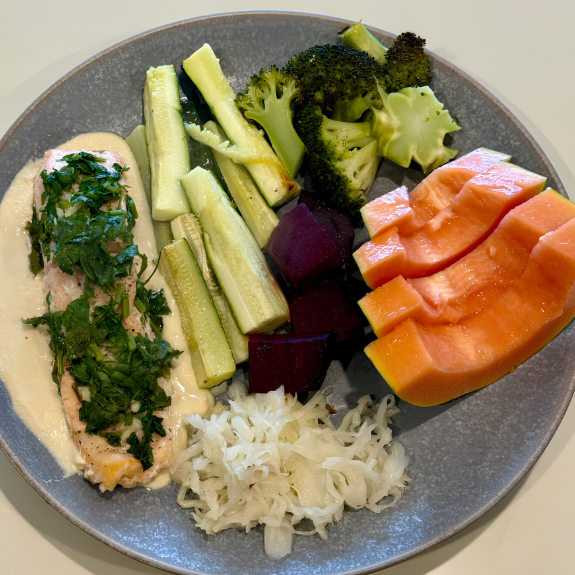
Dietitian Nicole Marie offers a series of natural gluten free foods suitable on a budget
There's definitely some truth to this one. Specialty gluten free breads, cereals, pasta and other replacement products can cost considerably more than their regular equivalents. So, when you need to follow a strict gluten free diet for life, those additional costs can add up.
But here's something worth remembering: not everything you eat needs to come from the gluten free aisle.
Rice, potatoes, eggs, fruit, vegetables, legumes, unprocessed meat, fish, nuts and seeds are all examples of naturally gluten free foods. Building meals around these everyday ingredients can help reduce your reliance on expensive specialty products.
Of course, gluten free alternatives still have their place. The goal is finding a balance that works for your budget, lifestyle and nutritional needs.
Myth 6: “You need special gluten free products to follow a gluten free diet”
When you're first diagnosed with coeliac, it's easy to feel like you need to replace everything in your pantry with products from the gluten free section. But you might be surprised by how many meals you already enjoy are naturally gluten free, or can be adapted with a few simple changes.
Think grilled chicken with rice and vegetables, salmon with roast potatoes, eggs with avocado or a homemade rice bowl. You don't need a cupboard full of specialty products to eat well with coeliac disease.
However, there's another question worth considering: Are the meals you're putting together actually meeting your individual nutritional needs?
Because while naturally gluten free foods can form the foundation of a balanced diet, the right combination and quantities will vary from person to person. This is especially relevant if you've experienced nutritional deficiencies, ongoing gut symptoms or significant dietary changes since diagnosis.
Myth 7: “Gluten free means you have to give up your favourite foods”
One of the biggest concerns people have after diagnosis is that they'll never be able to enjoy their favourite foods again. Pizza, pasta, burgers, cakes, desserts or even eating out with friends can suddenly feel complicated.
But following a gluten free diet doesn't mean food has to become boring. There are plenty of gluten free alternatives available and many everyday recipes can be adapted without completely changing the meal.
The challenge is often less about what you can eat and more about knowing which products are suitable, how to manage cross-contact and how to feel confident eating outside your own home. And that's something that becomes easier with the right knowledge and experience.
Your gluten free diet should be safe, but it should also be enjoyable and realistic enough to maintain for life.
Myth 8: “Coeliac disease is just a food intolerance”
Coeliac disease is often grouped together with food intolerances, but they're definitely NOT the same thing.
Coeliac disease is an autoimmune condition, where consuming gluten triggers an immune response that damages the small intestine. A food intolerance, on the other hand, does not involve the same autoimmune process and intestinal injury. This distinction matters because someone with a food intolerance may be able to tolerate certain quantities of a particular food.
For someone with coeliac disease, however, intentionally consuming gluten isn't considered safe, even if they don't experience obvious symptoms. Understanding this difference can also help when explaining your dietary requirements to friends, family members and restaurant staff.
Because for someone with coeliac disease, being gluten free isn't simply a preference. It's a medical necessity.
Gluten Free Myths and Facts: What should you actually believe?
If you've been managing coeliac disease by piecing together information from Google, social media, Facebook groups and food packaging, it's understandable if some of the advice you've come across feels contradictory. And sometimes, the issue isn't that you're not being careful enough.
You might be avoiding foods unnecessarily, overlooking important nutritional considerations, or relying on information that doesn't apply to Australian food standards.
The real question isn't just whether you're eating gluten free. It's whether you're managing coeliac disease in a way that's appropriate for you.
Think you're managing coeliac disease correctly?
These 15 questions might make you think twice.
I've created a free self-check covering food labels, cross-contact, nutrition, symptoms and long-term management.
See how many you can confidently answer without having to Google them.

This is exactly what I help my clients work through. Because the goal isn't to make your diet more restrictive. It's to help you feel confident that your gluten free diet is not only safe, but nutritionally balanced and actually working for you.
We can review your current diet, nutritional needs, symptoms, relevant blood results and everyday management practices to identify what you're already doing well and where you might benefit from more support.
Book a consultation with Accredited Practising Dietitian Nicole from the Gut Health Group, who has supported hundreds of people with coeliac disease to confidently manage their condition, understand labels and build a nutritionally balanced, sustainable gluten free diet.

Thank you for reading this series at A Gluten Free Family. If you would like to support the show and help us continue our work to improve awareness, education and make change in the world for coeliac disease and the gluten free diet, subscribe to our Buzzsprout.
We have access to prizes, discounts, ad-free shows, bonus content coming soon and a shoutout on the podcast as well!